Before Sour Diesel had a name, before it had a legend, before it had a price tag that made Wall Street traders flinch, it was just a cut of something extraordinary making its way through a very small circle of people who cared more about cannabis than anyone in their world was willing to admit. This is the story of how a strain became a myth, and how a man known only as The Weasel sits at the center of it all.
Shakedown Street, Indiana, 1991
To understand Sour Diesel, you have to go back to a Grateful Dead parking lot.
In June of 1991, a young cannabis enthusiast from Western Massachusetts was at a two-night Dead run at Deer Creek Amphitheater in Indiana. On the lot, he crossed paths with two sellers named P-Bud and Joe Brand, and purchased an ounce of a strain called Dogbud for $500. The purchase itself was unremarkable enough. What wasn’t unremarkable was what happened when he asked Joe Brand to mail him a few more ounces later. Inside one of those packages were 13 seeds.
He popped four of them. One turned out male and got tossed, a decision he would come to regret. The three remaining females became the foundation of what would eventually reshape American cannabis culture. The most powerful of the three, a plant he named Chem Dog for its sharp chemical-meets-diesel smell, became known as Chem 91. The other two became Chem’s Sister and Chem B.
The man who grew those seeds took on the nickname of the strain itself: Chemdog.
The Grateful Dead didn’t just move people across the country for music. They moved genetics, seeds, and connections through a loose network of heads who cared deeply about finding the best cannabis on earth. The Dead’s parking lot scene was, functionally, one of the most important horticulture exchanges in American history.
A Phish Show Changes Everything
The story could have ended in Western Massachusetts. Instead, it traveled.
In March of 1992, Phish played their first show at the Roseland Ballroom in New York City, a converted ice skating rink on 52nd Street with a capacity of roughly 3,200. Phish had spent years building their following at venues like the Wetlands Preserve in Tribeca before graduating to the Roseland, and that night the crowd was dense with the same countercultural overlap that made Dead shows so generative: musicians, growers, dealers, and obsessives who all knew each other.
It was at this Roseland show that Chemdog and a man named Mike Klopp, known in cannabis circles simply as The Weasel, first met. Both quickly recognized the other had access to something special. When they realized they were both holding serious fire, a friendship and a trade were immediately cemented. Chem 91 went with The Weasel back to Staten Island. In the opposite direction went a cut of RFK Skunk, making its way back to Western Massachusetts.
Just as the Dead had passed a cultural torch to Phish, Chemdog passed a genetic one to The Weasel. Neither of them could have known what it would become.
Strawberry Fields and the NYC Network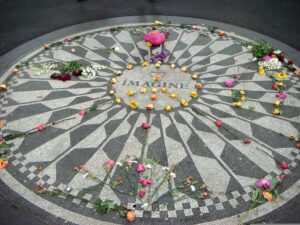
While the Roseland connection put Chem 91 in The Weasel’s hands, the New York City cannabis network that would eventually distribute its offspring was being built across multiple scenes simultaneously.
Central Park’s Strawberry Fields, the John Lennon memorial on the Upper West Side, was a known gathering point for the city’s counterculture in the early 1990s. It was there, in 1992, that The Weasel and JJ, a cannabis enthusiast who would later found Top Dawg Seeds, crossed paths. Shortly after that meeting, The Weasel obtained both the Massachusetts Super Skunk and the Chem 91 cut. He didn’t like the name Chemdog. It carried too much baggage, and in New York, the “chem” prefix implied something tampered with. He began calling what he was growing simply “Diesel,” street vernacular at the time for anything top-tier and potent.
The Diesel era had begun.
The Wetlands Preserve: Ground Zero
If you want to understand how cannabis moved through New York City in the early 1990s, you have to understand the Wetlands Preserve.
Opened on February 12, 1989 by Larry Bloch at 161 Hudson Street in Tribeca, the Wetlands was built into a former Chinese food warehouse at what Bloch himself described as the least desirable corner in New York, right at the mouth of the Holland Tunnel. It was designed as both a music venue and an activist center simultaneously, with proceeds from the door going to environmental organizations. The wall just inside the entrance carried the inscription: “we labor to birth our dance with the earth.” There was an “earth station” near the entrance, an inner sanctum downstairs, and a tie-dyed VW bus that eventually ended up in the Rock and Roll Hall of Fame.
The Wetlands became, as it has been correctly described, “ground zero for post-Grateful Dead jam bands.” Phish played there for years before they outgrew it and moved to the Roseland. Blues Traveler, Spin Doctors, Dave Matthews Band, Oasis, Ween, and a young Maroon 5 all played the Wetlands. The Roots built their New York following by driving up from Philadelphia for weekly open-mic nights. Erykah Badu and Jill Scott cut their teeth at the women’s showcase in the basement.
On Tuesday nights, the Wetlands ran Grateful Dead-themed events that drew the city’s hippie contingent and cannabis community in dense, overlapping crowds. It was at these Tuesday nights that a young Joe Murray, later known as AJ, met JJ of what would become Top Dawg Seeds. Both were chasing the same thing: the best weed in the city. JJ had access to some exceptional Northern Lights. AJ had just returned from Amsterdam, where he’d been smoking Northern Lights heavily enough that it gave him an immediate basis for connection.
Through JJ, AJ eventually got an introduction to The Weasel. According to AJ, the first meeting had a particular dynamic: The Weasel asked AJ to pack him a bowl from whatever he had, and said he’d return the favor in two weeks with something from his current grow. Something about The Weasel made AJ take the offer seriously. Two weeks later, The Weasel came back and pulled out a batch of Chem 91 that stopped everything.
The Wetlands was, in this way, the social infrastructure through which the genetics that would become Sour Diesel found their human chain of custody.
Amsterdam, Dutch Genetics, and the Accidental Cross
The Weasel was not a passive keeper of genetics. He was actively expanding what he was working with.
After AJ returned from one of his Amsterdam trips with a small batch of Silver Pearl, a five-way sativa cross from Sensi Seeds, and showed it to The Weasel, The Weasel was sufficiently impressed that he made his own trip to Amsterdam. He came back with seeds from several Sensi Seeds originals, including Northern Lights #5, Hawaiian Indica, Super Skunk, Early Pearl, and a strain called Oasis. He began growing these out alongside his existing Chem 91 stock, producing a regularly rotating supply that went to AJ and his partners to move through New York.
Then something unexpected happened.
In one of The Weasel’s grow rooms, a crop of Chem 91 was pollinated by an accidental hermaphrodite from the Dutch genetics he was running, most likely a cross involving Northern Lights and a Skunk lineage known as DNL. The entire crop seeded. Instead of treating this as a loss, The Weasel sold a seeded half pound to a person known as Vondo and to the circle around AJ. AJ and his crew grew out only three seeds from that delivery and named the resulting plants Diesel #1, Diesel #2, and Diesel #3.
One of those plants, from seeds that were almost discarded as an inconvenient accident, produced what would become the most sought-after cannabis on the East Coast.
The name “Sour Diesel” has its own origin story that is equal parts accident and poetry. According to accounts from those present, one of the Albany crew wrote “Our Diesel” on a jar to distinguish their phenotype. The number 5 was already on the jar, and the 5 was misread as the letter S. “Our Diesel” became “Sour Diesel.” The greatest cannabis brand name in East Coast history was born from a labeling error.
AJ and the Making of a Legend
From roughly the mid-1990s onward, AJ became the primary grower and distributor of the Sour. He has never claimed to be its creator, preferring to describe himself as its servant and keeper. His role was cultivation and distribution at a level that turned a small-circle anomaly into a citywide obsession.
AJ was producing around 20 pounds of Sour Diesel every few months out of a production space in Manhattan, moving it at prices that were extraordinary for the era: roughly $500 to $550 an ounce direct from the cultivator, with street prices reportedly reaching $800 to $1,000 an ounce at the retail end. By the late 1990s, following Mayor Giuliani’s crackdown on street-level cannabis spots, the city’s delivery services thrived largely on their ability to source real Sour Diesel. If you had it, you were connected. If you didn’t, you wanted it.
AJ’s description of the name has become the canonical explanation: “It’s called the Sour Diesel because it soured countless friendships, business relationships, and everything else. It was like a magical power.” The sour in the name was not about flavor. It was about what the strain did to people who wanted it and couldn’t get it.
Because AJ supplied it so consistently throughout Manhattan, the strain picked up his name in street circulation. He did not know he was being called “Asshole Joe” or that people were distributing cuts under his name until 2005, when he returned from a trip to find someone had broken into his apartment, taken cuts from his mother plant, and started circulating them under the label “AJ’s Cut.”
What Was Lost and What Remains
The Wetlands Preserve closed in September 2001, forced out by the gentrification that transformed Tribeca from a neighborhood where warehouse rents supported activist music clubs into one where luxury condominiums replaced them. The building at 161 Hudson was converted; the space that once held the tie-dyed VW bus and hosted the Tuesday night Dead jams became commercial retail. Jon Stewart eventually owned a unit upstairs.
The cannabis culture that moved through the Wetlands, the Roseland, and Central Park’s Strawberry Fields in those years had no legal standing, no documentation, and no commercial infrastructure. It existed entirely in the memories and relationships of the people who were part of it. Strains were passed as clones, hand to hand, with no paper trail.
The Weasel himself remains a mostly private figure, known largely through the accounts of those who knew him. His full name, Mike Klopp, appears in a handful of documented sources. His role as the grower who brought Chem 91 to New York, renamed it Diesel, and accidentally produced the cross that became Sour Diesel is well-established in cannabis history, even if the wider world has never heard of him.
In 2024, AJ came forward publicly, partnered with Flowerhouse, a licensed New York cultivator, and brought the original Sour Diesel into the legal market for the first time. For a strain that spent 30 years in the underground, it was a full-circle moment. New York had finally legalized what its culture had been built around for decades.
The Bigger Picture
What happened in the parking lots, nightclubs, basement grow rooms, and park meadows of early 1990s New York was not just cannabis history. It was the convergence of music culture, counterculture, and cultivation expertise in a way that permanently altered what people expected cannabis to be.
The Grateful Dead built a traveling community that exchanged seeds and genetics across state lines. Phish inherited and extended that community, and a chance meeting at the Roseland Ballroom in 1992 put Chem 91 in New York. The Wetlands Preserve gave the people who cared about this stuff a place to find each other. The Amsterdam connection introduced Dutch genetics into an already exceptional American line. An accidental pollination in a Staten Island grow room produced a serendipitous cross. A jar was mislabeled. A name stuck.
None of it was planned. All of it was inevitable, in the way that important things tend to be inevitable once you understand how the pieces were already in motion.
Sour Diesel did not come from a lab or a breeding program. It came from a community, and at the center of that community, moving quietly through all of it, was a man from Staten Island who didn’t like the name Chemdog and called what he had Diesel instead.
That was enough to change everything.
Experience It for Yourself
Sour Diesel’s story belongs to New York, and there is no more fitting place to experience it than Staten Island, the borough where The Weasel grew it, where the genetics were refined, and where a local cannabis culture quietly changed the world.
At NugHub, we carry Sour Diesel and a curated selection of premium products that honor exactly this kind of lineage. Whether you want to pick up in person at our Staten Island dispensary or have it delivered straight to your door through our top-rated delivery service, we make it easy to get your hands on the real thing.
The history is remarkable. The weed should be too.
Visit us in-store or order online at NugHub NY and see what’s available today.