You walk into a dispensary, pick up a jar of Grassroots flower, a Rythm pre-roll, and a Select vape cart. Three different brands. Three different logos. One parent company.
That is how a significant portion of New York’s legal cannabis market actually works. The brands consumers recognize are often the visible layer of a much larger corporate structure operating behind the scenes: multi-state operators, licensed processors, and white-label manufacturers controlling cultivation, production, and distribution at scale. Understanding who those companies are, what they own, and how they move product through the state gives you a clearer picture of what you are actually buying and who benefits when you buy it.
At NugHub, we think informed shoppers make better choices. So here is a look at the major players operating above the brand level in New York cannabis, including one whose name became synonymous with how this infrastructure can go wrong.
How New York Cannabis Actually Works at the Top
New York’s adult-use market, which launched in December 2022, was designed with a specific structural philosophy: no vertical integration for most operators. A company cannot hold cultivation, processing, and retail licenses simultaneously unless it qualifies as a microbusiness or a legacy registered organization from the medical era. Everyone else has to pick a lane.
That regulatory choice created a layered supply chain where cultivators grow product, processors and distributors handle manufacturing and logistics, and retailers sell to consumers. At each layer, different companies hold influence.
On top of that structure, New York’s Type 3 Branding License allows brands to enter white-label agreements with licensed processors without conducting any plant-touching activity themselves. A brand can exist, be sold across hundreds of dispensaries, and generate significant revenue without ever growing or processing a single gram of cannabis. That is the legal version of what the Omnium Health situation exposed as a much grayer practice.
Understanding these layers is the foundation for understanding who actually runs this market.
1. Green Thumb Industries (GTI): The Brand Engine
Green Thumb Industries is one of the largest multi-state cannabis operators in the United States. Founded in Chicago in 2014 by Ben Kovler, GTI now operates in 14 states with 20 manufacturing facilities, 108 RISE Dispensaries, and approximately 4,800 employees.
In New York, GTI is most visible through its brand portfolio. The company manufactures and distributes Rythm, Dogwalkers, Beboe, Good Green, and Incredibles across the state, with Rythm claiming the position of the number-one selling flower brand in the United States. GTI holds an indoor cultivation license in New York, one of the more valuable distinctions in the market, because indoor control translates directly into consistency across harvests.
In August 2025, GTI executed a significant corporate maneuver: it sold the intellectual property rights to several of its key brands, including Rythm, Dogwalkers, and Beboe, to Agrify Corporation for $50 million. Agrify subsequently renamed itself RYTHM, Inc. and began trading under the Nasdaq ticker RYM. The twist is that GTI simultaneously entered a licensing agreement with the newly renamed company to continue manufacturing and distributing those same brands. GTI still makes the products. It now pays a monthly licensing fee for the right to use the brand names it created.
For consumers, nothing changes at the dispensary level. For anyone interested in how cannabis corporate structures work, it is a useful illustration: brand ownership, manufacturing rights, and distribution can be separated into distinct commercial arrangements, each carrying its own value.
What GTI runs in New York: Rythm flower and pre-rolls, Dogwalkers pre-rolls, Beboe, Good Green, and Incredibles edibles, all through RISE Dispensary retail locations.
[leafbridge_specific_product_filter brand=”1562ecc0-15bb-4ab9-a12f-03cb2ea4c045″ count=”20″]
2. Curaleaf Holdings: The World’s Largest Cannabis Company
Curaleaf Holdings, headquartered in New York and publicly traded on the Toronto Stock Exchange, describes itself as the world’s largest cannabis company by revenue as of 2025. It operates in 17 states with a network that spans cultivation, processing, and retail under multiple brand names.
In New York, Curaleaf’s history predates the adult-use market. The company has been serving the state’s medical cannabis program since 2017 through its registered organization license, which comes with vertically integrated rights unavailable to newer market entrants. That legacy position gives it a structural advantage that newer operators simply cannot replicate: it can grow, process, and retail under one corporate umbrella.
When adult-use wholesale operations launched, Curaleaf entered the broader market through its Select and Grassroots brand portfolios. Grassroots, which Curaleaf acquired in 2020 in a deal that made it the largest U.S. cannabis operator at the time, is the brand New York consumers most frequently encounter on dispensary shelves under the Curaleaf umbrella. The company also markets the Anthem pre-roll line and the Select ACE vape series in the state.
Curaleaf’s current brand lineup in New York includes Curaleaf, Select, Grassroots, Anthem, and Find, each positioned for a different consumer segment from premium to accessible.
What Curaleaf runs in New York: Grassroots flower, Select vapes and edibles, Anthem pre-rolls, and its own Curaleaf-branded products, plus retail dispensary locations in Hudson Valley, Forest Hills, and other New York markets.
[leafbridge_specific_product_filter brand=”37eac182-3204-4ee4-8ca0-a927193468f0″ count=”20″]
3. Cresco Labs: America’s Largest Cannabis Wholesaler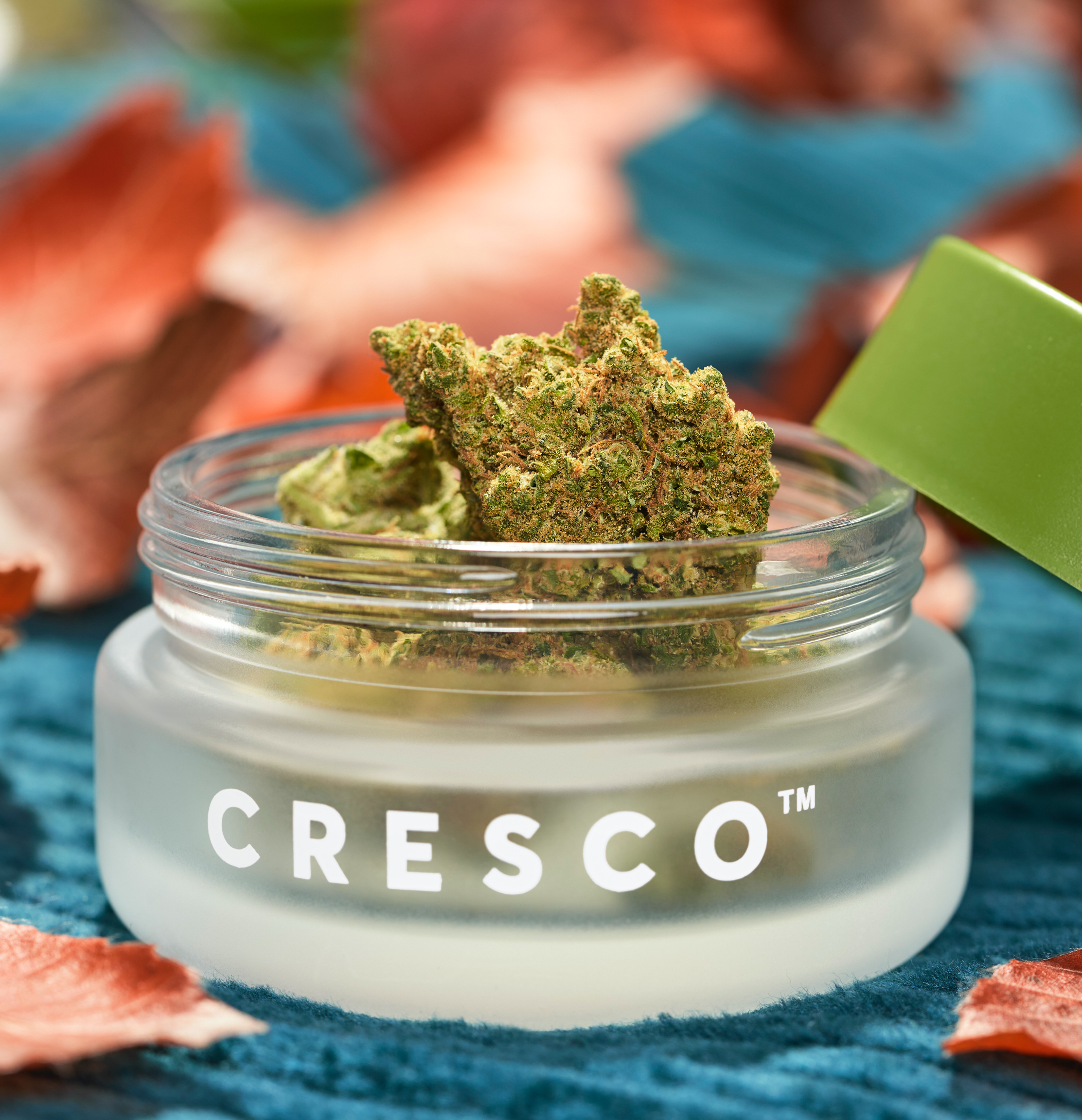
Cresco Labs is a Chicago-based, publicly traded multi-state operator that has built its New York strategy around a consumer packaged goods model rather than a retail-first approach. The company describes itself as the largest wholesaler of branded cannabis products in the country, prioritizing distribution reach over dispensary count.
In New York, Cresco operates through its registered organization license, which it inherited when it acquired Columbia Care in 2022 in an all-stock transaction valued at $2 billion, giving it the vertically integrated rights that come with legacy medical operator status. Its Sunnyside dispensary brand currently operates locations in Williamsburg and Huntington, among other markets.
The Cresco brand portfolio that appears on New York dispensary shelves includes Cresco-branded flower, concentrates, and pre-rolls; High Supply for budget-conscious consumers; FloraCal Farms for craft-oriented buyers; Mindy’s Chef Led Artisanal Edibles developed with James Beard Award-winning chef Mindy Segal; Remedi for wellness and medical-use formats; Good News for recreational users; and Wonder Wellness. That is a house of brands covering nearly every consumer segment in the market, all manufactured and distributed by the same parent company.
Cresco’s CPG-first philosophy means its products are intentionally designed to reach as many dispensaries as possible through wholesale distribution, which is why Cresco-family products show up consistently across the New York market regardless of which retail chain you walk into.
What Cresco runs in New York: Cresco flower and concentrates, High Supply, FloraCal Farms, Mindy’s edibles, Remedi, and Good News, distributed through wholesale to licensed retailers statewide and retailed through Sunnyside dispensary locations.
4. iAnthus Capital Holdings: The Legacy New York Operator
iAnthus Capital Holdings is a multi-state operator headquartered in New York City with one of the longest-standing presences in the state’s cannabis market. As a legacy registered organization holder, iAnthus controls one of New York’s original ten vertically integrated medical cannabis licenses, which translates to cultivation, processing, and retail rights that give it structural advantages most newer operators cannot access.
In New York, iAnthus operates under its Citiva brand through dispensary locations in Brooklyn and Staten Island, among other markets. The company is currently completing construction on a cultivation and processing facility in Warwick, New York, with plans to commence adult-use wholesale operations upon its completion. That facility will allow iAnthus to expand from a primarily retail-focused New York presence into the wholesale supply chain, putting its branded products into dispensaries beyond its own locations.
Its product brands in New York include the MPX concentrate line and Anthologie premium flower, alongside its core Citiva-branded offerings. iAnthus is a smaller footprint than GTI, Curaleaf, or Cresco in the New York market as of now, but its legacy license status and expanding production capacity make it a significant structural player as the market matures.
What iAnthus runs in New York: Citiva retail dispensaries on Staten Island and in Brooklyn, MPX concentrates, Anthologie flower, and an expanding wholesale operation tied to its Warwick facility.
5. Omnium Health (Omnium Canna): The Infrastructure Player That Crossed the Line
No honest account of who runs New York cannabis is complete without discussing Omnium Health, because Omnium illustrates exactly how the processing and distribution layer of the market works, for better and for worse.
Omnium Health, operating as Omnium Canna, was a licensed adult-use processor and distributor based in Long Island with two facilities in Hauppauge and Lindenhurst. The company positioned itself as a full-service manufacturing partner for cannabis brands, offering private label manufacturing, co-packing, bulk supply, and white-label services covering every major product category including vapes, flower, pre-rolls, edibles, beverages, tinctures, and capsules. On the surface, Omnium was doing precisely what the Type 3 Branding License framework is designed to facilitate: connecting licensed production infrastructure with brand partners who want market access without building their own facilities.
The problem, according to the New York State Office of Cannabis Management, was that Omnium crossed a critical line. In October 2025, the OCM filed multiple charges against the company, alleging it had allowed unlicensed operators to rent its facilities and use its license to produce and package cannabis products that entered licensed dispensaries statewide. The OCM called it a “rent-a-license” or “reverse licensing” scheme, and it sought license revocation, a three-year debarment from future licensure, and $1 million in civil penalties.
The investigation, which began in February 2025 following a referral to the OCM’s newly formed Trade Practices Bureau, revealed contracts between Omnium and unlicensed businesses, with OCM investigators finding product packaging labeled “Omnium d/b/a MFused” as evidence that MFused had allegedly rented Omnium’s license and facilities. The situation also drew in popular brands Stiiizy and Grön, the latter of which disputed the OCM’s characterization and argued its arrangement with Omnium was disclosed, compliant, and short-lived.
The Omnium case exposed two important things simultaneously. First, it revealed that the infrastructure layer between brand and consumer in New York cannabis is real, significant, and largely invisible to shoppers. Second, it showed that without a functioning seed-to-sale tracking system, the state had no reliable mechanism to verify that what was on licensed shelves actually came from licensed operators. New York did not implement its Metrc-based tracking system until December 2025, nearly three years after adult-use sales launched.
What Omnium ran in New York: Licensed processing and distribution for multiple brands through white-label and co-packing arrangements, with OCM alleging the company extended that access to unlicensed operators in violation of the state’s foundational licensing rules.
Why This Matters When You Shop
Most consumers never think about these structures when they pick up a product. The brand name on the jar is the product, as far as the shopping experience is concerned. But understanding who actually produces what you buy, and under what licensing arrangement, is relevant for anyone who cares about consistency, accountability, and the integrity of the legal market.
When you buy a product from a brand backed by GTI, Curaleaf, Cresco, or iAnthus, you are buying something produced inside a publicly traded corporate structure with compliance teams, investors, and regulatory exposure in multiple states. Those companies have significant incentive to maintain product quality and licensing integrity. When you buy from a smaller independent brand operating under a Type 3 Branding License through a licensed processor, you are buying something where the quality depends entirely on the strength of that white-label relationship.
The difference matters. It is not that bigger corporate operators are always better, or that independent brands are automatically suspect. It is that the regulatory structure of New York cannabis creates real distinctions in accountability, traceability, and quality control across different tiers of the market.
What We Look For at NugHub
At NugHub, we vet the brands on our menu against exactly these considerations. We want to know who makes a product, under what license, and whether the cultivation and manufacturing standards behind a brand are consistent with what the label says. That means we carry products from GTI, Curaleaf, and Cresco brands because their compliance infrastructure is real and verifiable. It also means we carry independent and craft operators like MFNY and Rolling Green because their single-source, seed-to-shelf models are equally transparent, just in a different way.
[leafbridge_specific_product_filter brand=”d094af4e-efd8-433e-8fd5-a255ae95df55″ count=”20″]
What we do not carry is uncertainty. If we cannot verify the chain of custody behind a product, it does not go on our menu. That commitment is the entire reason NugHub exists as Staten Island’s first licensed dispensary, and it is the standard we hold every brand on our shelf to.
Browse our current menu at nughubny.com, or visit us at 1350 Forest Ave, Staten Island. If you have a question about where a product comes from or who makes it, our team knows the answer.