Key Takeaways
- Humulene is the terpene behind that dry, woody, hoppy note in a lot of cannabis. You’ll also see it called alpha-humulene.
- It’s named after hops, which can get up to 40 percent of their oil from humulene. Sage, ginseng and black pepper have it too.
- The same enzyme in the plant makes humulene and caryophyllene together, so humulene almost always shows up a step behind caryophyllene.
- Look for it in GSC, Gelato, Candyland, Death Star, Original Glue, Sour Diesel, Chemdawg, GMO Cookies and Headband, per Leafly.
- You’ll read that humulene curbs appetite or inflammation. That comes from early lab and animal research, and nobody’s shown it in the cannabis you buy.

Crack a jar of GSC or Sour Diesel. The first thing you smell is the sweet or the gas. Take a second breath and something drier shows up underneath: woody, a little bitter, like a fresh pour of a hoppy IPA.
That’s humulene.
It’s almost never the star of the jar, and the reason is kind of cool. The plant makes it right alongside caryophyllene, so it’s always riding in second or third place. Below you’ll find what it smells like, what it does (and what nobody’s proven yet), and the strains to look for.
What is humulene?
Humulene is one of the terpenes, the natural aroma compounds, that give cannabis its smell. It’s the woody, hoppy one, also called alpha-humulene.
Every strain smells the way it does because of terpenes. Cannabis makes dozens of them, and humulene is one of the regulars. New to terpenes? Start with our guide to what terpenes are.
The name gives it away: humulene was first found in hops, whose Latin name is Humulus lupulus. Plenty of other plants have it too. Wikipedia’s humulene entry lists sage, ginseng and spearmint, and Leafly’s humulene overview adds black pepper, basil and clove.
On a lab report you might see it as humulene, alpha-humulene or α-humulene. Same thing. It used to go by alpha-caryophyllene, which tells you how close it is to caryophyllene.
What does humulene smell like?
Humulene smells woody, earthy and herbal, with a dry, slightly bitter finish. Picture crushed sage, cracked pepper or the hops in a pale ale.
If you drink beer, you already know this smell. Humulene is a big reason hops smell like hops: dry, woody, a little grassy, bitter at the end. Some hop varieties get as much as 40 percent of their oil from it. Saaz, the classic Czech hop, runs about 15 to 25 percent, per Wikipedia’s Saaz entry.
In cannabis it plays backup. Humulene sits under the gas, the citrus or the candy and gives the smell something to stand on. Break up some GSC and you get mint and sweetness up front, then that dry, woody finish. That’s humulene and caryophyllene doing their thing.
Our take: humulene is underrated. A strain without much of it can smell flat, like one note on repeat. A strain with a good amount, smells finished.
What’s the difference between humulene and caryophyllene?
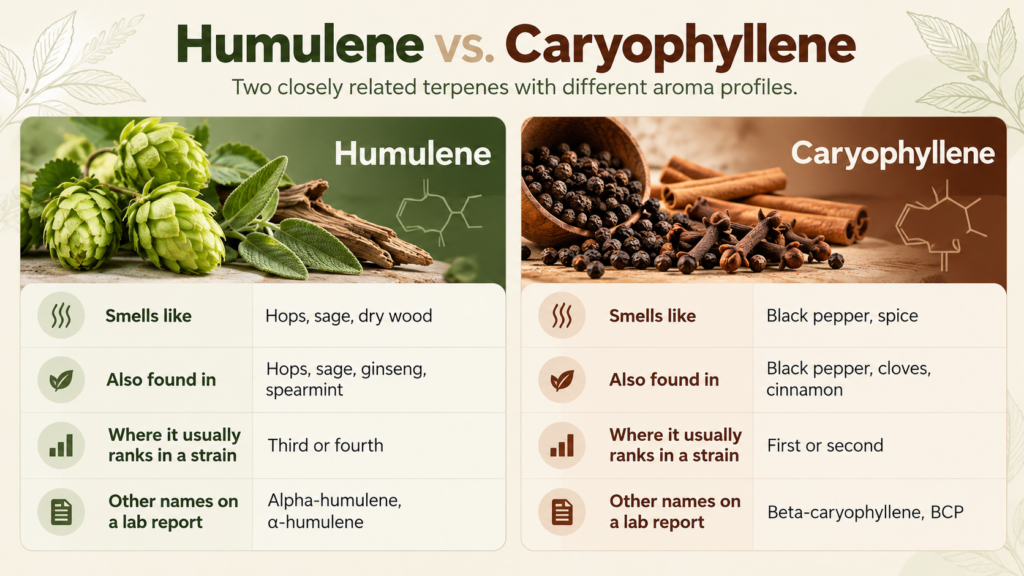
They’re built from the same atoms in a different shape, so they smell alike. Caryophyllene is peppery; humulene is woodier and more like hops.
Think of humulene and caryophyllene as siblings: same chemical formula, different arrangement. Caryophyllene leans peppery and spicy. Humulene leans woody, herbal and hoppy.
You almost never get one without the other, and a 2017 study shows why. Researchers mapping how cannabis makes its terpenes found one enzyme in the plant that produces both at once, roughly 2.5 parts caryophyllene for every 1 part humulene. They call the pair the two most common terpenes of their type in cannabis resin.
So if a jar smells peppery and spicy, there’s a good chance humulene is in there too, just a little quieter. Our caryophyllene terpene guide covers the louder sibling.
What does humulene do in cannabis?
Humulene changes how cannabis smells and tastes. Claims that it curbs appetite or inflammation come from early lab and animal studies, not people.
The part we know for sure: humulene changes the smell and the flavor. It’s one reason two jars with similar labels can smell totally different.
Search humulene and you’ll see bigger claims, especially that it kills your appetite. Most of that comes from lab and animal research, and a lot of it tested whole plant oils like balsam fir or black sage, not humulene by itself. Leafly’s overview rounds up those studies. None of them tell you what humulene does in a jar of flower or a vape you pick up in New York.
New York doesn’t let dispensaries make health claims, and we’d be skeptical of that one anyway. How a product feels comes mostly down to its cannabinoids, how much you have and your own tolerance. Terpenes like humulene shape the smell and taste, and that’s plenty of reason to pay attention.
Which cannabis strains are high in humulene?
Strains with humulene in their Leafly profiles include GSC, Gelato, Candyland, Death Star, Original Glue, Sour Diesel, Chemdawg and GMO Cookies.
Humulene usually lands third or fourth in a strain’s terpene lineup. Candyland and Gelato are two where Leafly puts it third. Caryophyllene is on top in every strain below, which is exactly what you’d expect.
Two East Coast classics made the list. Sour Diesel and Chemdawg both carry humulene behind their caryophyllene, and you can smell it: that gas comes off sharp and dry, not sweet. Our post on East Coast Sour Diesel has the backstory.
Leafly’s profiles are averages from lab-tested samples, so the jar in your hand can come out different depending on who grew it and which batch it’s from. The Certificate of Analysis (COA) is how you know for sure.
| Strain | Type (Leafly) | Top terpenes, in order (Leafly) | Flavor notes (Leafly) |
|---|---|---|---|
| Candyland | Sativa | Caryophyllene, limonene, humulene | Sweet, flowery, honey |
| Gelato | Hybrid | Caryophyllene, limonene, humulene | Sweet, flowery, pepper |
| GSC | Hybrid | Caryophyllene, myrcene, limonene, humulene | Mint, sweet, earthy |
| Original Glue | Hybrid | Caryophyllene, myrcene, limonene, humulene | Pungent, earthy, pine |
| Death Star | Indica | Caryophyllene, myrcene, limonene, humulene | Skunk, pungent, diesel |
| GMO Cookies | Hybrid | Caryophyllene, limonene, myrcene, humulene | Chemical, pepper, pungent |
| Sour Diesel | Hybrid | Caryophyllene, myrcene, limonene, humulene | Diesel, chemical, skunk |
| Chemdawg | Hybrid | Caryophyllene, myrcene, limonene, humulene | Chemical, diesel, pungent |
| Headband | Hybrid | Caryophyllene, limonene, myrcene, humulene | Diesel, earthy, pungent |
Is humulene indica or sativa?
Neither. Humulene shows up in indicas, sativas and hybrids alike. Leafly lists it in Candyland (sativa), Death Star (indica) and GSC (hybrid).
Indica, sativa and hybrid are labels for strains, and terpenes don’t follow them. You can see that in the table above.
If you’re shopping by smell, the terpene list on a COA will tell you more than the indica or sativa sticker.
How do you find humulene on a COA?
If the product’s COA has a terpene section, look for alpha-humulene. It’s usually sitting just below beta-caryophyllene on the list.
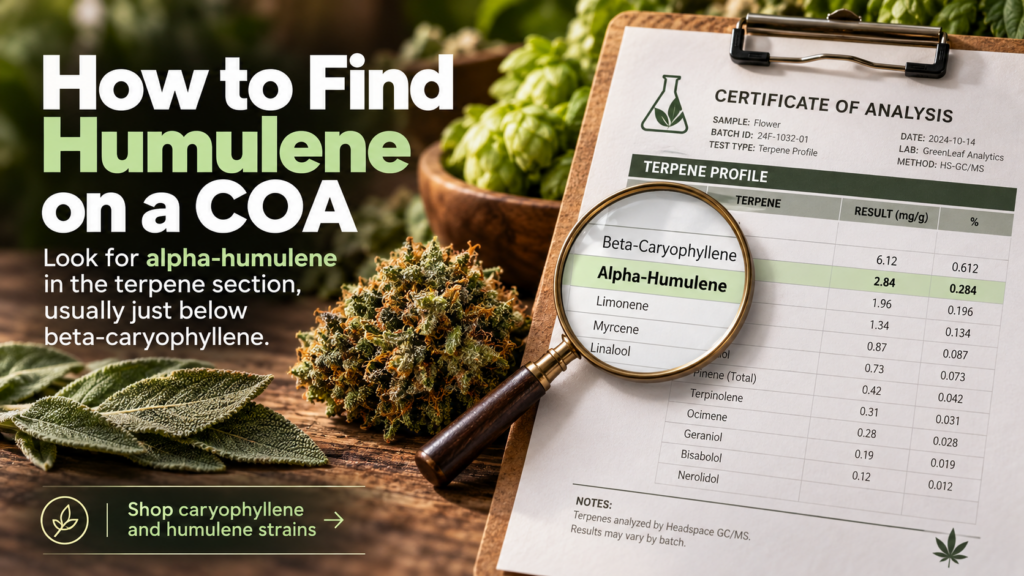
A COA (certificate of analysis) is the lab report behind every licensed product in New York. Not every COA lists terpenes, since some only cover the required safety and cannabinoid tests. When a brand does test terpenes, you’ll get a list of them with an amount next to each one.
Find alpha-humulene (or α-humulene, or just humulene) and see where it lands next to beta-caryophyllene. Caryophyllene near the top with humulene a spot or two behind? That’s the dry, woody back note this whole post is about.
Our guide to reading a cannabis COA walks through the rest of the report. The Office of Cannabis Management’s consumer page covers what licensed products have to meet in New York.
How do you shop for humulene at NugHub?
Start with caryophyllene-forward strains, since humulene rides along with them. Check the COA, or come ask us at our Forest Ave shop.
Since humulene follows caryophyllene around, our caryophyllene strains page is the easiest place to start. Look for names from the table above, or anything described as earthy, woody or peppery.
Then trust your nose. That dry, hoppy, slightly bitter finish under the main smell is the giveaway. Want to hear what it adds? Smell a humulene strain next to a myrcene-heavy one. Our myrcene terpene guide explains that terpene.
Come by the shop on Forest Ave in Staten Island or order delivery. If you’re 21 or older with a valid ID, you’re good; no medical card needed.
Frequently Asked Questions
What is humulene?
Humulene is a terpene, one of the aroma compounds in cannabis. It’s also in hops, sage and black pepper, smells woody and herbal, and goes by alpha-humulene too.
What does humulene smell like?
Woody and herbal with a dry, slightly bitter finish, a lot like the hops in a pale ale. In cannabis it usually sits under louder notes like diesel or citrus.
Is humulene the same as caryophyllene?
No, but they’re close: same atoms, different shape. The plant makes them together, so humulene usually shows up right behind caryophyllene.
What strains are high in humulene?
Leafly lists humulene in GSC, Gelato, Candyland, Death Star, Original Glue, GMO Cookies, Sour Diesel, Chemdawg and Headband. Batches vary, so check the COA.
Does humulene suppress appetite?
That idea comes from early lab and animal research, not studies of cannabis products in people. New York also doesn’t allow dispensaries to make health claims about terpenes.
Is humulene indica or sativa?
Neither. Humulene turns up in indicas, sativas and hybrids. Leafly lists it in Candyland (sativa), Death Star (indica) and GSC (hybrid).
Next time you open a jar, smell it twice. The first sniff tells you the strain. The second, that dry, woody note underneath, is usually humulene.